Rule #2: Double Tap. In those moments when you’re not sure the undead are really dead, dead, don’t get all stingy with your bullets. — Zombieland
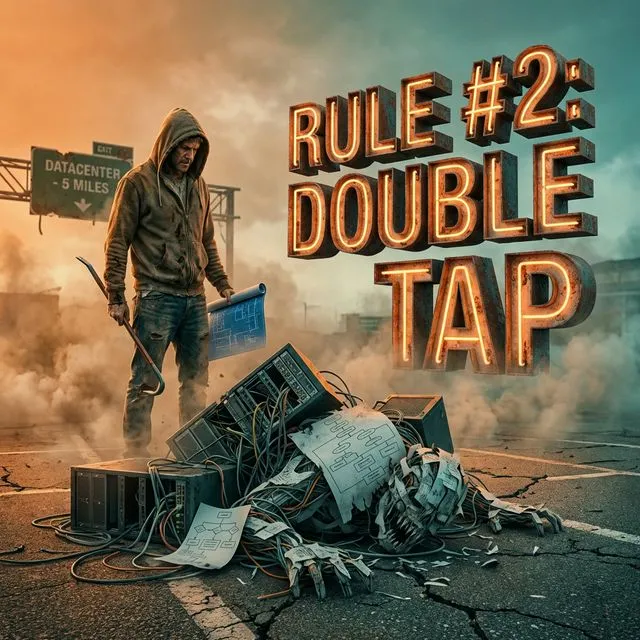
We need to talk about the bodies in your Confluence pages.
You know the ones. The “Target State Architecture v4_FINAL_ACTUAL_v2.pptx”. It’s sitting there, right now, staring at you with cold, dead eyes. It looks like a system design. It smells like a system design. But let’s be honest: it died the moment you hit “Export to PNG”.
In the world of Enterprise Architecture, we are currently living through our own version of The Walking Dead, but instead of flesh-eating walkers, we are being chased by out-of-date Visio shapes. And much like in the movies, the biggest threat isn’t the monsters; it’s our own inability to work together to survive.
The Patient Zero Moment
Here is a horror story in three acts:
- The Infection: An architect spends three weeks drawing a beautiful “End-to-End Payment Flow.” It is glorious. The boxes are aligned. The arrows don’t cross. It is the Shaun of the Dead of diagrams - funny, clever, and perfectly executed.
- The Bite: The diagram is pasted into a Word document and signed off by a committee.
- The Turn: Two days later, a developer changes an API endpoint.
That’s it. The diagram is now a lie. It is a reanimated corpse of a truth that no longer exists. It is shuffling around your organisation, moaning “Braaaains” (or “Complianceeee”), misleading junior engineers and confusing auditors.
If you rely on static images to document living systems, you aren’t an architect; you’re a necromancer.
Rule #1: Cardio (Keep It Moving)
In the zombie apocalypse, if you stand still, you die. The same applies to architecture.
Modern systems are frantic. They are 28 Days Later zombies - fast, angry, and constantly changing. You cannot capture a Kubernetes cluster in a static jpeg any more than you can capture a rage-infected sprinter with a polaroid camera.
This is where CALM (Common Architecture Language Model) comes in as the cure.
CALM treats architecture not as a picture, but as code. It is the DNA of your system. When you define your architecture in CALM, you aren’t drawing a snapshot; you are defining a living model that lives in your repo, next to your code.
- Static Diagram: A painting of a garden.
- CALM: The actual seeds, soil, and slightly aggressive triffids growing in real-time.
”You’ve Got Red on You”
We’ve all been in that meeting. The one where someone points to a box on the screen labeled “Legacy CRM” and asks, “Does this still talk to the Warehouse?”
And the room goes silent. The architect looks at their shoes. Someone mutters “I think Dave knew” - but Dave left in 2019.
That is the architectural equivalent of hiding a zombie bite. “I’m fine, really,” says the architecture, while its arm is falling off.
With CALM, you can validate the bite marks. You can run calm validate. You can query the relationships. You can verify the structural integrity of your system before you deploy. You don’t have to guess if the system is infected with bad dependencies; the CI/CD pipeline will tell you.
Let’s Go to the Winchester
In Shaun of the Dead, the plan was simple: “Take car. Go to Mum’s. Kill Phil, grab Liz, go to the Winchester, have a nice cold pint, and wait for all this to blow over.”
A lot of enterprises are trying to do exactly that. They are hiding in the pub, hoping the complexity blows over.
It won’t.
The hoard is coming. The regulators are banging on the windows. The AI agents are scratching at the door, demanding structured data they can understand.
You can keep hitting them with cricket bats (Powerpoint Presentations), or you can immunise your organisation.
Stop drawing pictures of the dead. Keep the patient alive with CALM.
Join the resistance at calm.finos.org.